The Ultimate Rucksack Guide
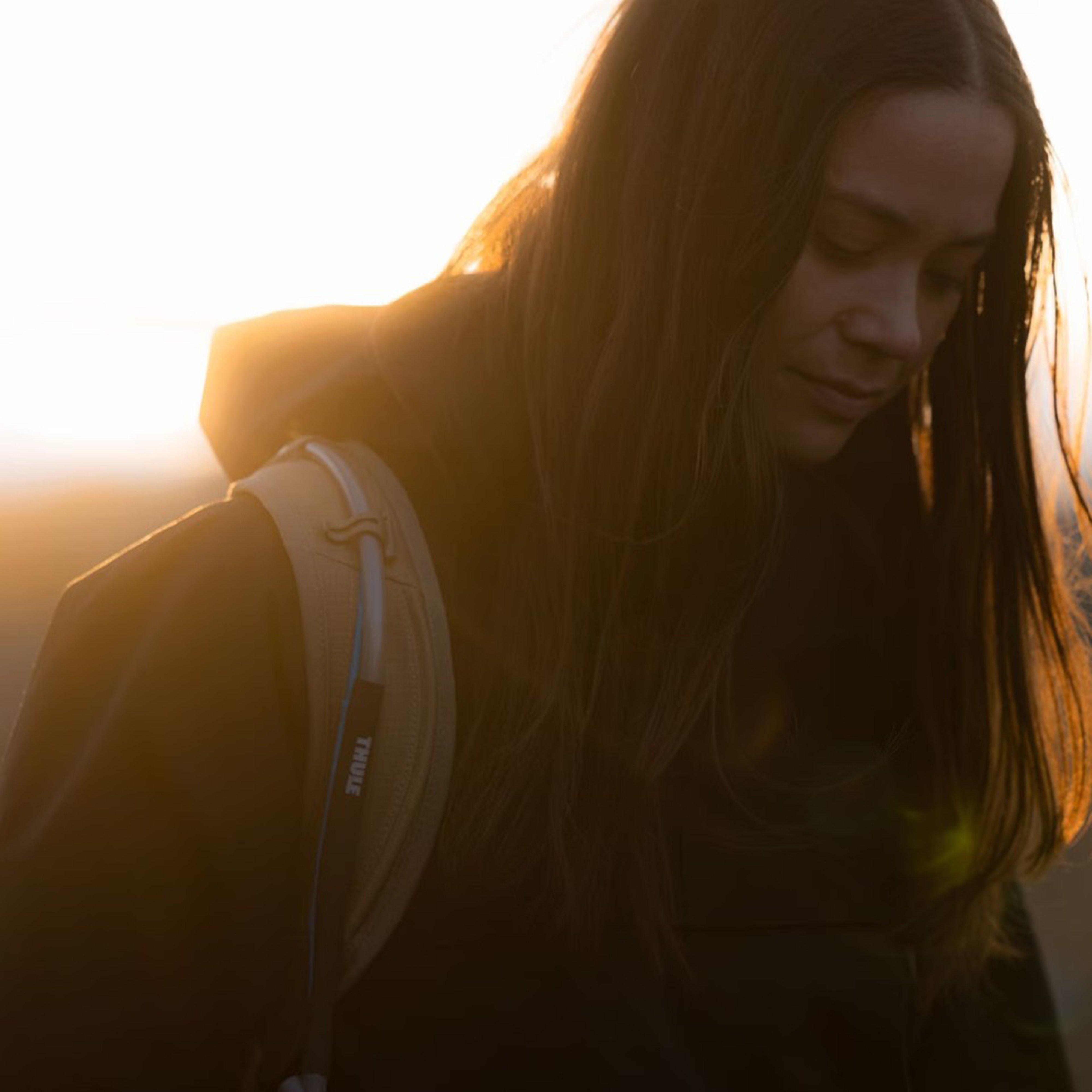
Whatever activity you enjoy, you need to ensure that all your essentials are packed well and securely.
At GO Outdoors we stock a wide range of packs for a variety of uses, from packs suited to your multi-day hiking adventures, to your smaller daypacks for those essentials while out on trail, there are some things you need to consider when buying and packing your rucksack.
Shop All Packs
Types of Rucksack
You might see terms like 'backpack', 'rucksack', 'day pack' and 'travel pack' and wonder what the difference is between them. The most important thing you need to understand is the sizing system.
Packs are measured in litre capacity and this will be represented by the number in the pack name. This refers to how much volume the pack can hold for your kit, but if you're not sure on the size you need, it's always a good idea to check them out in person or check the measurements of the pack to give you a better idea.
Some packs will have additional capacity which will often be represented by two numbers in the name, e.g. '50:60' this means that the pack is 50l but can be expanded to 60l with some adjustments.
To make things easier, here’s a breakdown of the types of packs and what they’re suited to:
How to Fit a Rucksack
Comfort is key when it comes to having a rucksack on your back for a prolonged period, and that all starts with fitting your pack correctly. Getting the correct fit means that the weight will be distributed in a way that should lower the chance of shoulder and back pain.
If you live near a GO Outdoors store, pop in and have a look at the rucksacks in person. All our stores have a free rucksack fitting service, where one of our in store colleagues will be happy to help you adjust the pack properly to fit you right. If you can't make it to a store, then don't worry as in this video, we explain how to properly fit your rucksack:
Rucksack fitting is only generally required for packs 50 litres plus, and only for those performing long-distance load carrying, so if you're heading out on DofE expedition, you really need to fit your pack correctly. The strongest muscles in your body are in your legs, so this means that you want to carry the weight of your rucksack through your legs AND NOT your shoulders.
If your rucksack’s waistband is too high the weight will load onto your spine. The correct position will transfer the weight straight onto your pelvis and thus through to your legs.
The aim is to have the weight distributed 70-80% on the hips, 20-30% on the shoulders. The pack should be comfortable, stable and be sat close against the back.
Small Day Packs & Running Vests: 6-10 Litres
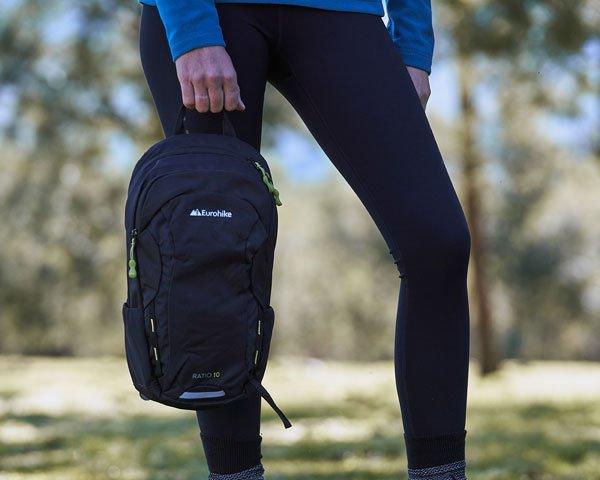
These compact packs are better suited to those shorter days out. They fit your essentials in such as food, water and a packable waterproof, but you’re unlikely to get much else in there.
Shop Small Day PacksDay Packs: 10–30 Litres
Ideal for day hikes, commuting, running, cycling where you don't need to take a lot with you. They’re great for all day adventures on the trail and due to their greater size, are more suitable than a small day pack during the winter as you can fit extra layers in there too. Some, but not all, will come with extra support features such as a chest strap and waist belt, to help distribute the weight of your pack to make your day out that bit more comfortable.
Shop Day Packs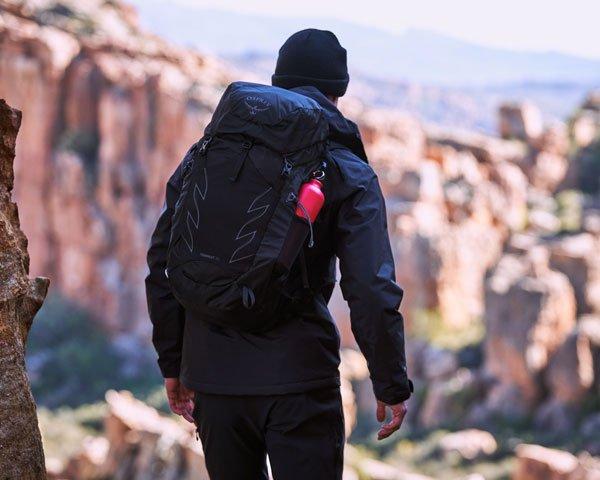
Small Multi-Day Packs: 35–50l
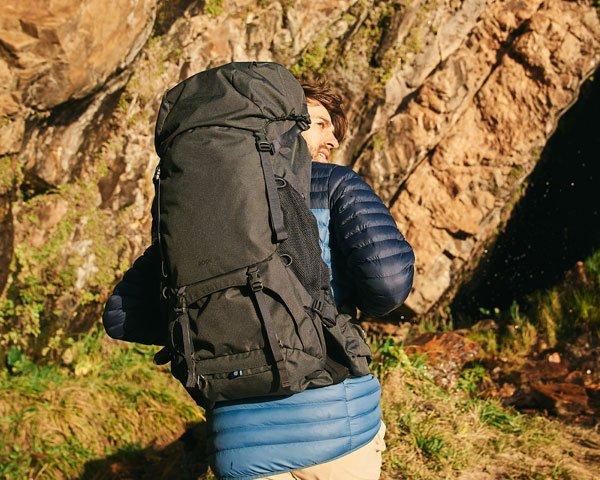
If you’re looking for something to contain all your gear for a 2-3 day hike, then the small multi-day pack may be the perfect size. This size pack is built to carry your tent, sleeping pack, cooking gear and enough food for a couple days too. They will typically come with adjustable straps which allow you to fit larger items such as tents on the outside of the pack, as well as hip belts and extra straps to help fit the packin the way that suits you most. Although they can carry a tent if needed, this pack size is probably better suited for those looking to complete a hut-to-hut hike to avoid the extra weight.
Shop Small Multi-Day PacksLarge Multi-Day Packs: 50+ Litres
Anything above 50L capacity is likely to be used for more gear and ideal for camping holidays, DofE, festivals, backpacking, wild camping etc where you need to not only pack more but can make use of additional features to add on more kit. Packs of this size will often have a hip belt and chest fastening to help spread the weight around your body evenly.
Shop Large Multi-Day Packs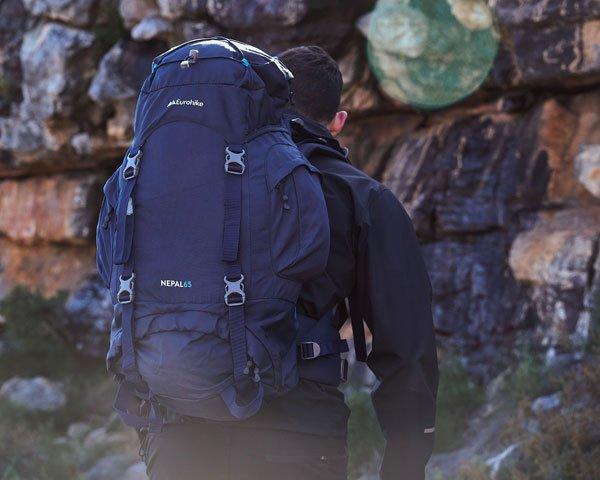
Travel Backpacks
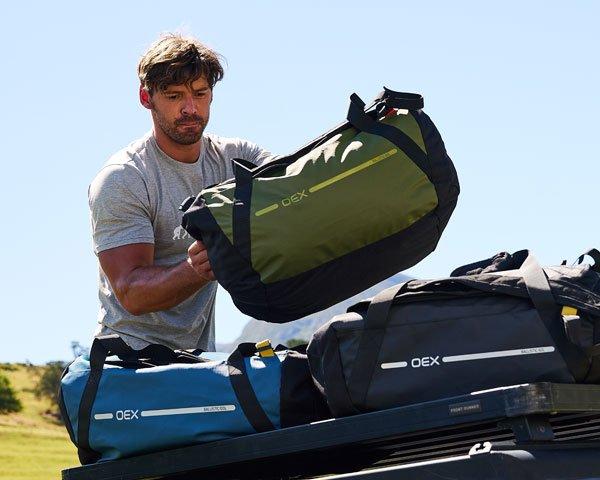
Travel packs are designed for… you guessed it, travel! These large packs are designed for living out of over the space of your trip and will often have a detachable day pack so you can leave the bulk of your pack in your hostel when not needed, meaning you can get out and explore the local area.
Shop Travel BackpacksBelt Pack / Lumbar Pack / Hip Belt
Different brands will often call these packs different names, but they are essentially a small pack that sits at the lower of your back and fastened around your waist and are very popular with runners to help them carry items such as gels for longer runs. Running vests are more form-fitted than a backpack, with greater support, hydration bladder compatibility and extra pockets for your gels and soft water flasks, they’re also great for a day out hiking if you prefer a sleeker fit.
Shop Running Packs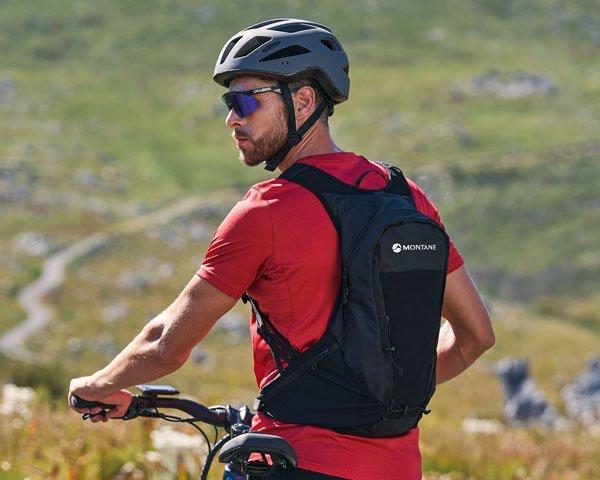
Rucksack Features & What They Mean
With so many rucksacks available, the best way to differentiate between them all is with the features that they have. There are so many additional features on packs and it's worth knowing what they are to make sure you get the most out of your pack. Here are a list of common features you might find described on a pack:
-
Adjustable Back System: ABS systems mean that you can lengthen or shorten the back of the pack to fit your body better, this helps to make your pack more comfortable.
-
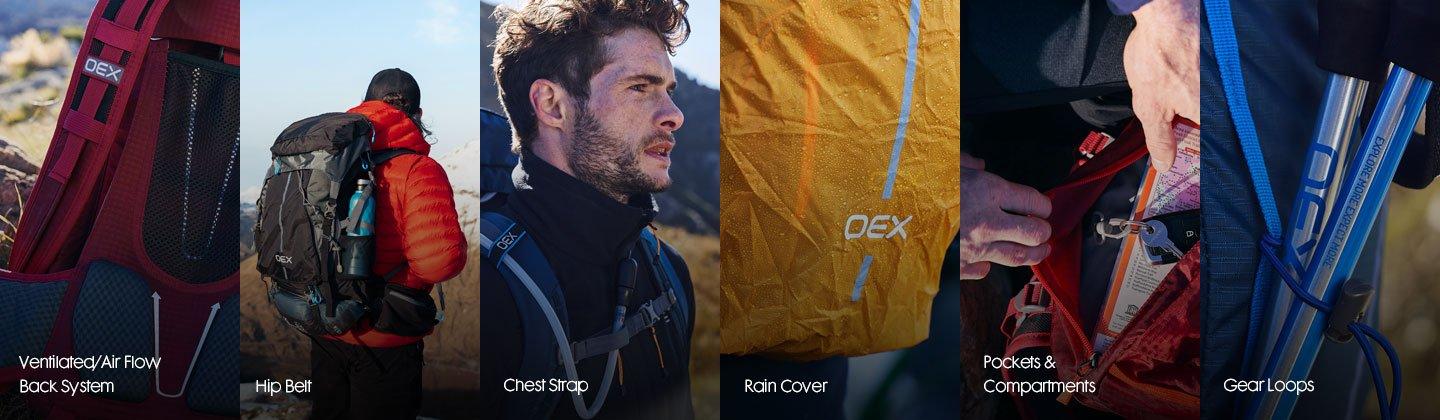
Ventilated/Air Flow Back System: Creating space between your back and the rucksack that helps air to circulate, this should help keep your back from sweating too much.
-
Hip Belt: Found on medium to large packs, there to help distribute the weight of the pack to your hips for a more comfortable carry.
-
Chest Strap: Adds stability to the top of your pack to stop it moving around.
-
Rain Cover: Most rucksacks are not waterproof and will come with either an integrated rain cover or you can pick up a rain cover separately. This adds a layer of protection to stop rain getting in through the top of your pack and making the contents damp.
-
Pockets/Compartments: Different brands and style of pack will have different pockets and compartments available. Smaller daypacks may have a padded laptop sleeve if designed for commuters. Large rucksacks may have lid pockets, side pockets and more. Pick up a pack that works for your needs.
-
Gear Loops: Loops of elastic on the outside of your pack to help you attach things like axe axes, walking poles, or even tents and sleeping bags.
-
Daisy Chain: Rows of webbing on the outer of your pack, again for the purpose of attaching items to the outside.
-
Front Opening: Many packs designed for travel may feature a front opening, this means you've got easy access to everything in your pack like you would on a suitcase.
-
Hydration Compatible: The pack will feature the relevant compartments to house a hydration bladder, with an opening to put the straw through to turn the pack into a hydration pack.
How to Adjust Your Rucksack
-
If your rucksack has an adjustable back system, adjust this to make sure that the shoulders and the hip belt are in line with your own shoulders and hips.
-
Fasten your hip belt, the pads should sit on your hips. Tighten the adjuster being mindful not to put too much pressure on your stomach, but making the belt tight enough to take most of the weight of the pack.
-
Next move onto the shoulder straps, pull the adjusters down so that the straps tighten, again being mindful to not make them too tight, but to prevent the pack being loose.
-
Clip your chest strap together, on some packs this can move up and down the straps, make sure that this is in line with the front of your shoulders. Tighten the strap, this adds stability to the top end of your pack.
-
At the very top of the shoulder straps, you'll find top tensioners. If you pull these forward it will bring the rucksack closer to your shoulders. This prevents the pack from pulling down away from you and impeding your balance. It also helps make sure that weight is centred and driving through the hips.