Buying Guide: Insulated Jackets

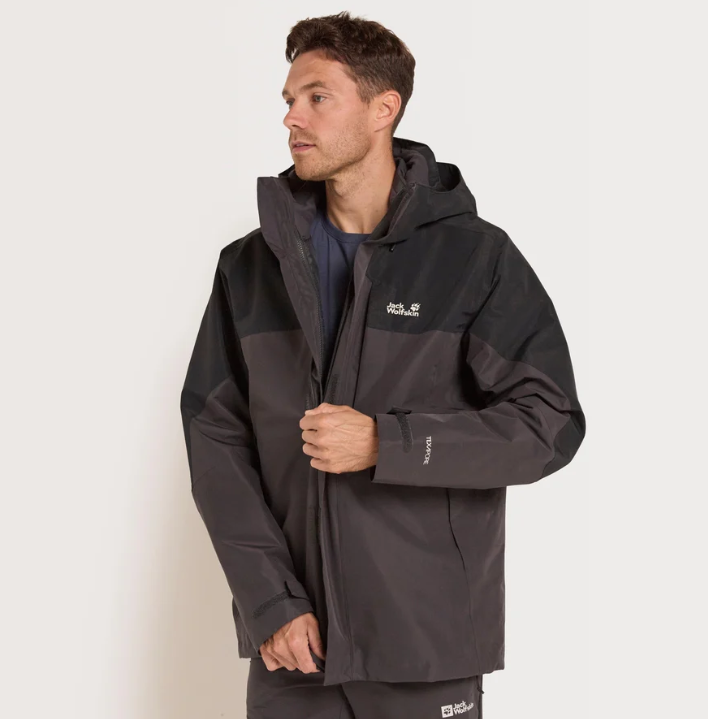
When the colder months roll around, your trusty waterproof just isn't enough to keep you warm. Insulated Jackets are what you need for a winter coat and are ideal for those who really feel the cold during autumn and winter. These jackets can be used as an outer layer or worn underneath your waterproof jacket during wet days.
In this guide, we'll take a deep dive into the different types of insulated jacket available at GO Outdoors and help you decide which is right for you.
Shop Men's Insulated Jackets Shop Women's Insulated Jackets Shop Kids' Insulated Jackets Shop All Insulated Jackets
What is an insulated jacket?
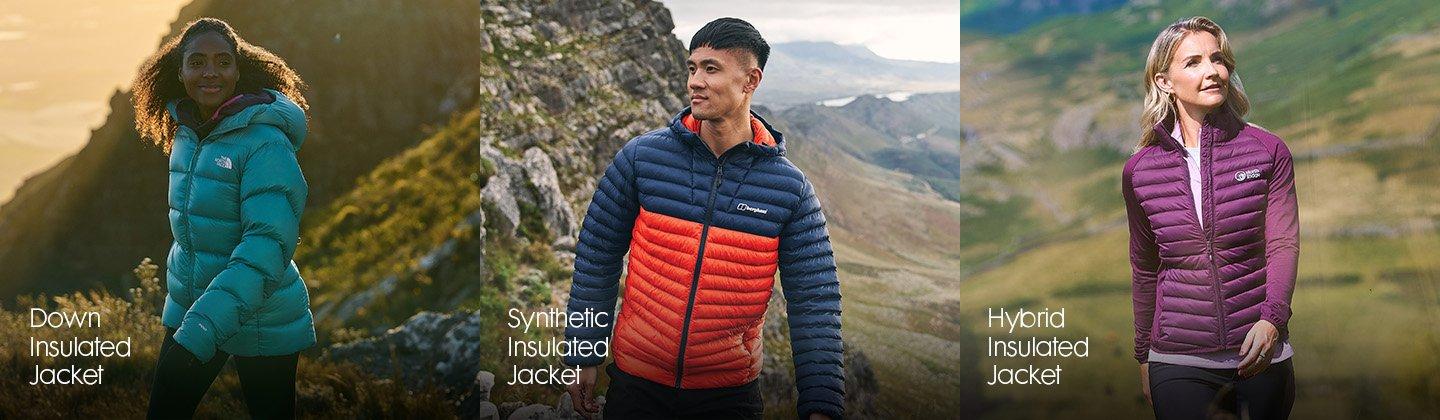
Insulated jackets are coats that are filled with an insulating material and come in three main varieties: down insulation, synthetic insulation or a combination of the two. These types of jackets are brilliant for cold temperatures, as they offer a layer of body warming insulation that keeps your body heat inside the jacket.
Technological advancements in recent years have meant there have been some incredible developments in the insulating jackets which are now on offer. You may remember people wearing puffer jackets from years past, looking something akin to the Michelin Man. These days, insulated jackets are much more sophisticated, with varying levels of insulation available meaning you'll be able to find the thick insulation needed for an Arctic expedition, or the lightweight insulation to slip under your waterproof as part of your layering system.
Insulated jackets are NOT a replacement for a waterproof jacket (unless the jacket specifies waterproof), as heavy rain will compromise their insulating properties. However, when the weather is dry, or a little damp and very cold, an insulated jacket is exactly what you're looking for! No outdoor jacket will have you feeling more snug than an insulated jacket.

Down vs Synthetic Insulation
If the two main types of insulation are down and synthetic, then what is the difference? Which is better? The simple answer is, they're both great and will both keep you warm, but one may excel over the other in certain cases. In this video, Charlie from GO Outdoors explains the difference between down and synthetic insulated jackets to help you choose the right insulation for your winter needs.
What is Down Insulation?
Down jackets contain a layer of down and feathers to help keep you warm. Down is the fine layer of fluffy feathers underneath the normal feathers on waterfowl, usually geese or ducks. Most major outdoor brands will ethically source this down to avoid cruel practices such as live-plucking and force-feeding. You can ask any brand if their down is ethically sourced before purchase.
Down is used because normal feathers are unable to retain loft on their own, which is why there must be certain percentages of down to balance a percentage of feathers in any garment classed as being a ‘down insulator’. This is where the percentage figure you find on all down products comes from. For example, if a down jacket indicates it has 80/20 down, this means the garment contains 80% down, and 20% normal feathers.
When down is compressed the filaments of the fibres create small air pockets that trap air, which in turn traps body heat, keeping you warm. Using down and feathers gives down jackets a great warmth to weight ratio, as the jackets are often very lightweight.
The Drawbacks of Down Insulation
The only drawback to down jackets is how they handle moisture. These jackets (unless specified) are not waterproof. Moisture causes the down to clump and this will hinder the insulating properties and can take a long time to dry out. If you're heading out in heavy rain, it's always wise to have a lightweight waterproof to throw over the top of the jacket. Advancements in down technology have seen the introduction of hydrophobic down (also known as Hydrodown) which means that the down is treated to handle moisture better than standard down, however, we would not advise a down jacket in a downpour.
During the manufacturing process, down is sorted, washed, and sterilised. It is during this sorting process that the fill power (stated as a number such as 500 or 600) is determined. This rating is based on how many cubic inches the down displaces in a given area, or simply, the space the down takes up. The higher the fill power, the higher the insulating capabilities.
Quick Points
-
– Lightweight
-
– Packable
-
– Superior warmth
-
– Not ideal in a downpour unless jacket specifies it is waterproof
-
– Slightly more difficult to clean and care for
What is Synthetic Insulation?
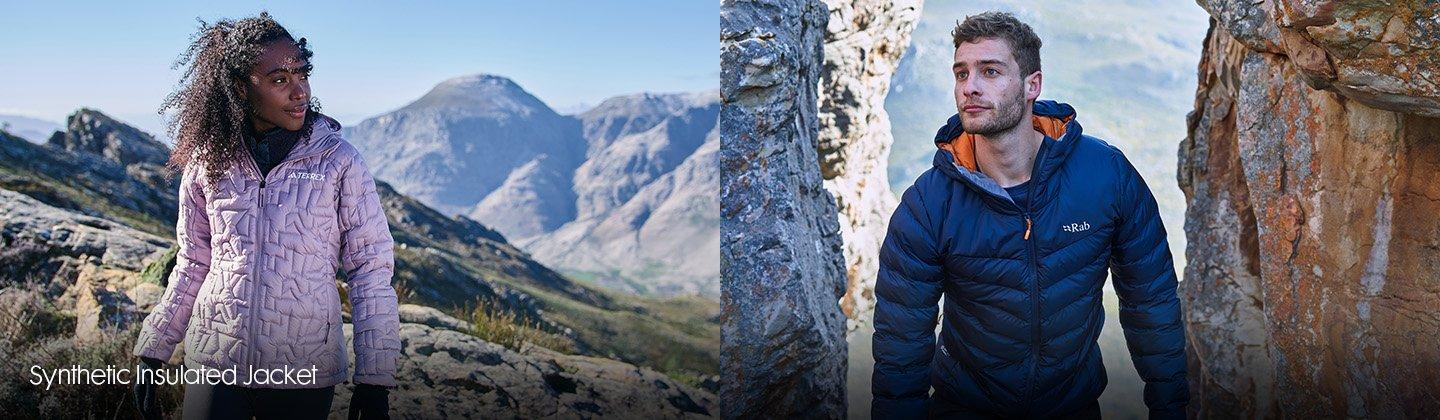
Synthetic insulated jackets contain man-made, synthetic insulation use polyfibres; the lab-made equivalent of natural down. This is often a popular choice among those who don't wish to use anything derived from animal products. Synthetics are used to attempt to replicate the heating effects of down, without the bulk, and with the chance to achieve higher levels of breathability, all at a lower cost.
Although heat is circulated with ease, synthetic insulation does suffer from heat loss at a quicker rate than a natural down jacket, making it more suitable for times when your body is still producing its own heat, for example during periods of exertion. Advancements in synthetic insulation over the last few years have seen synthetics getting closer and closer to replicating down products. Technology such as PrimaLoft from Montane uses feather-like fibres rather than actual feathers to mimic the down construction.
Synthetic insulation is also much better at handling moisture than down, and will dry much quicker if it gets wet.
Quick Points
-
– Remains warmer in wet weather than down, because the insulation dries quick
-
– Lower cost than down
-
– May lose heat quicker than down
-
– Easier to clean and care for than a down jacket
-
– Need more synthetic insulation to mimic down, meaning jackets will be slightly heavier
What is Hybrid Insulation
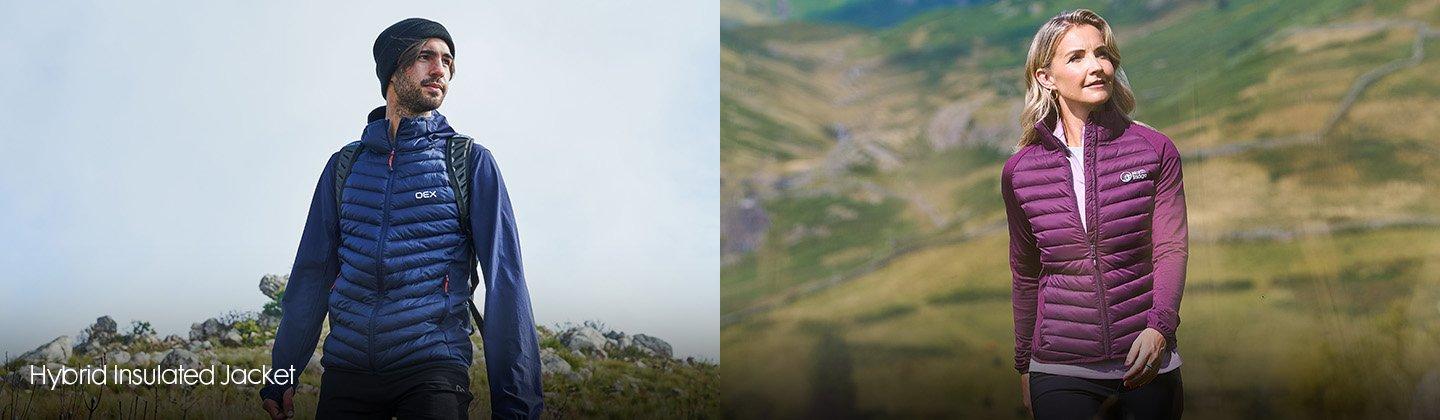
Hybrid insulation is a growing technology among insulated jackets. These jackets combine both down and synthetic insulation, to harness the benefits of both. Hybrid jackets come in a variety of styles. Some jackets may feature both insulators separately within the jacket to improve range of motion (a down jacket with synthetic sides may feel less 'puffy'). While some brands are mixing the insulators within the jacket to aid warmth and moisture handling properties.
Hybrid insulation seeks to combine the best features of different insulation technologies - such as warmth, packability, moisture management, and ease of movement - while minimising the drawbacks of any single type. As the technology improves, we may see hybrid jackets that offer the performance of high-end down jackets at a more affordable price.
How to Care for Your Insulated Jacket
Since the properties of down jackets are so unique, you may have guessed that they take a little extra care to prolong their lifespan. Read the guide below and we'll take you through the steps of how to wash/clean your down jacket.
Read Down Jacket Care GuideNashath Abdul Khader
Author & Outdoor Enthusiast Passionate about technology, AI, and the outdoors, Nashath has keen interest in exploring how emerging innovations can enhance everyday outdoor experiences and adventures.