Expert Advice: Tent Buying Guide
At GO Outdoors we understand that choosing the right tent is vital for an enjoyable and comfortable experience.
Whether you’re planning a family weekend trip away, a multi-day hike, or a festival outing with all your friends, it’s important you choose a tent the fits your needs. This guide will help to clear up any questions you may have before purchasing your tent. Let’s first run through tent terms to assist you in understanding some of the jargon used in this guide.
Shop All Tents & EquipmentTent Terms Explained
-
Berth: The berth of a tent refers to the space or sleeping area within a tent and how many people can fit inside. However, this can be confusing. The berth of a tent does NOT include your luggage or any gear you have with you. So, for example, 2 people with 2 bags will need a 4-berth tent, NOT a 2 berth.
-
Hydrostatic Head: The Hydrostatic Head is a measurement used to quantify a fabrics resistance to water. It’s a way to gauge how waterproof the material on your tent is. The hydrostatic head is measured in millimetres and indicates the height of a column of water that a fabric can withstand before it starts to leak through.
1,000 mm hydrostatic head means the fabric can withstand the pressure of a column of water that is 1,000 millimetres (1 meter) tall before it begins to leak.
2,000 mm to 3,000 mm is typical for lighter tents, offering good water resistance for light rain.
5,000 mm and above is more common in high-quality tents that are designed for heavy rain and harsher conditions. Some extreme-weather tents may even have ratings above 10,000 mm.
1,000 is the legal limit a tent must be to be ‘waterproof’.
-
Sewn-in Groundsheet: A sewn in groundsheet is a type of groundsheet is a type of groundsheet that is integrated into the tent walls. This helps the prevention of insects, wind proofing and resistance.
-
Flysheet: This is the outer layer of a tent.
-
Tunnel Tent: Tents based on a tunnel design with several poles arched, usually taller tents.
-
Dome Tent: Usually smaller tents, a dome tent can be quite stable due to the poles crossing in the middle of the tent.
-
Geodesic / Semi-Geodesic: This refers to a variation in how the tent poles cross. These tent types are very stable in rough weather. This design is typically reserved for backpacking / mountain tents.
-
Polycotton: Polycotton is a more ‘breathable’ fabric compared to synthetic fabrics such as nylon and polyester. The cotton content allows moisture from inside the tent to escape which is helpful when reducing condensation inside the tent.
Different Tent Types
Pop-up Tents
Pop-up tents are the ultimate solution to a hassle-free camping trip. These tents take seconds to pitch. These tents spring into shape in a matter of seconds by being thrown out and pegged down. These tents are lightweight, and easy to use, ideal for festivals, backyard sleepovers, or even casual campers.
Shop Pop-Up Tents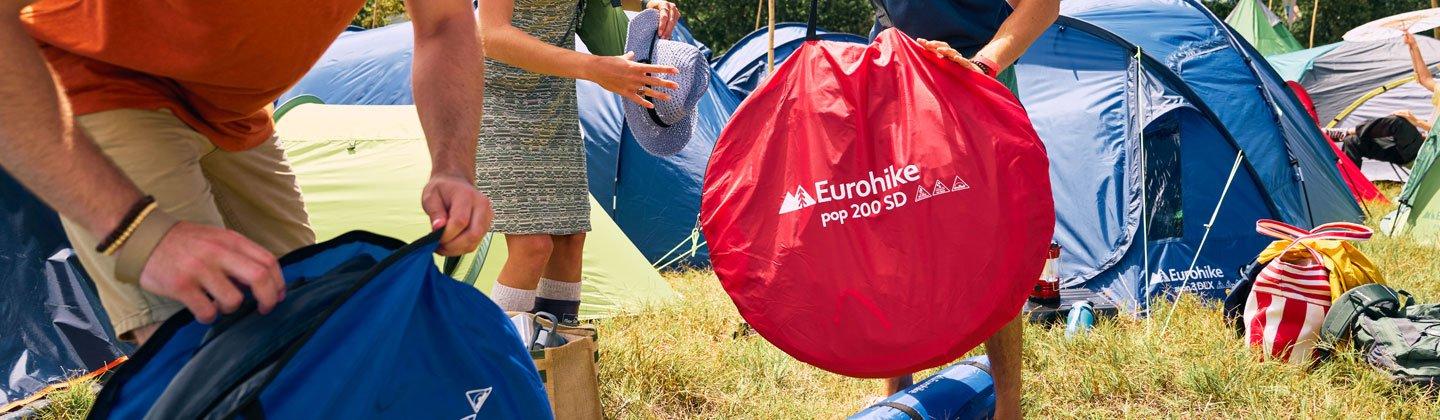
Weekend Tents
These tents are compact and designed to be easy to use. Perfect for campers who like to enjoy the outdoors for a couple of days. You may be seeking for a tent that has a larger living space for relaxing at the end of a long day, or even more space for your things. These tents are useful when it comes to ease of use and portability, ideal for those spur-of-the-moment weekends away.
Shop Weekend Tents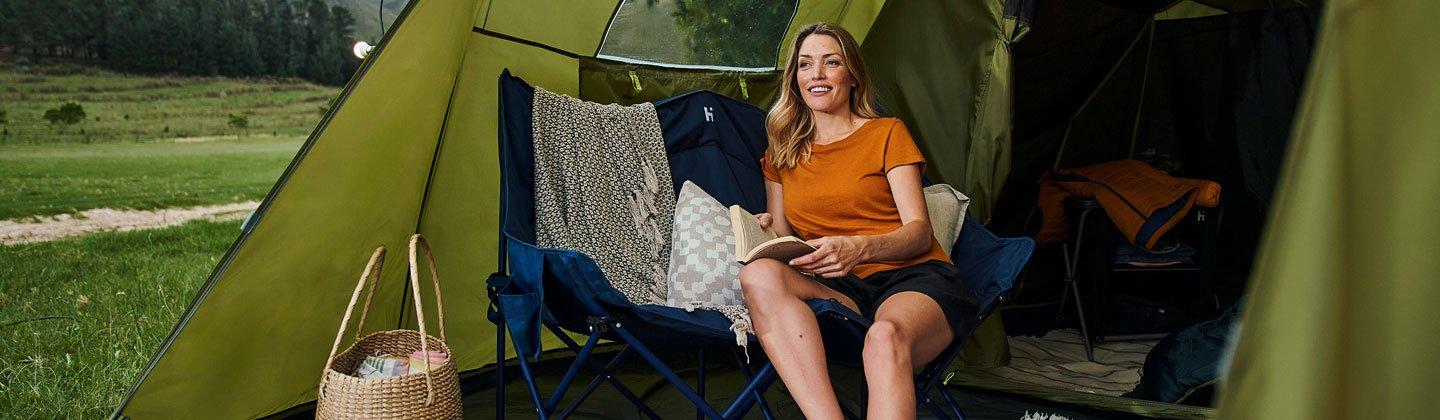
Festival Tents
When you’re looking for your festival tent, the chances are you’re going to be looking for something that is on the cheaper side in comparison to the other options available on the market. When choosing your tent, allow for one extra person on the berth for example, if there are two campers, you’re going to need a 3-person tent. This will allow more room for gear, and food storage if needed. Due to the unpredictable British ‘summer’ you may want to consider a built-in porch. This will allow a space for you to leave your wellies and the rest of your muddy gear without soiling the living area of your tent.
Shop Festival Tents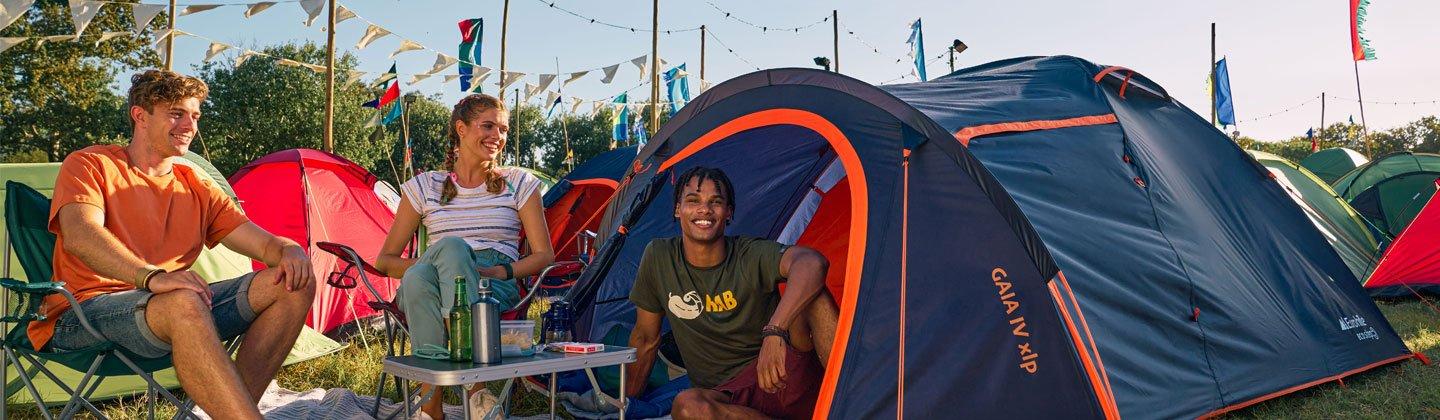
Family Tents
Family tents usually withhold a larger capacity compared to a standard tent. This is usually 3 to 9 berths with a variety of styles, areas and of course, the ample space. These tents also offer multiple rooms providing a more ‘home from home’ feel whilst camping allowing families to enjoy their own space on camping trips. You may find you want to add optional accessories including porches, tent carpets and footprints for even more extra space!
Shop Family Tents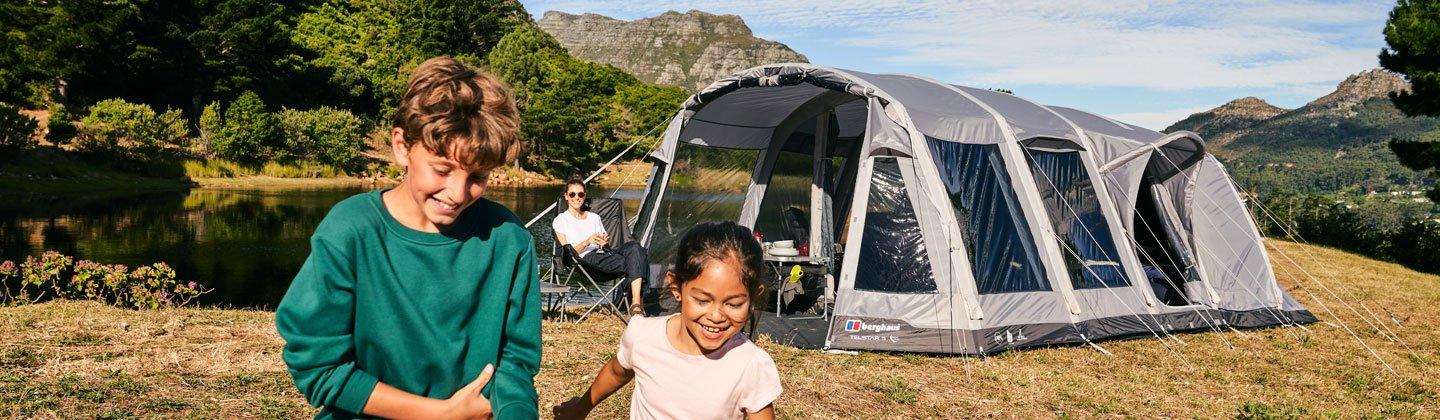
Inflatable Tents
Air tents are also known as ‘inflatable tents’, contain the newest technology on the scene. The traditional metal or fibreglass poles have been swapped out by new air beams. These beams are usually made of materials such as PVC or polyester. These tents are simple to use and have been designed for convenience. Simply attach the pump nozzle to the inflation valve and begin by inflating each tube.
If you’re using an electric pump, it will typically have a built-in pressure gauge, these pumps may also have a safety feature that shuts off the air when it reaches a certain pressure. Over recent years, air tents have gained more traction particularly with large groups and families who can appreciate the ease of the set up.
Shop Inflatable TentsBackpacking Tents
Backpacking tents are designed to be compact, and lightweight. They are for campers who prioritise transportability. They are built with the intention to be easy to carry and for a quick and easy set up. Designs are normally tunnel or geodesic shape, allowing the best in wind resistance, rigidity and stability in open areas such as fields.
Shop Backpacking Tents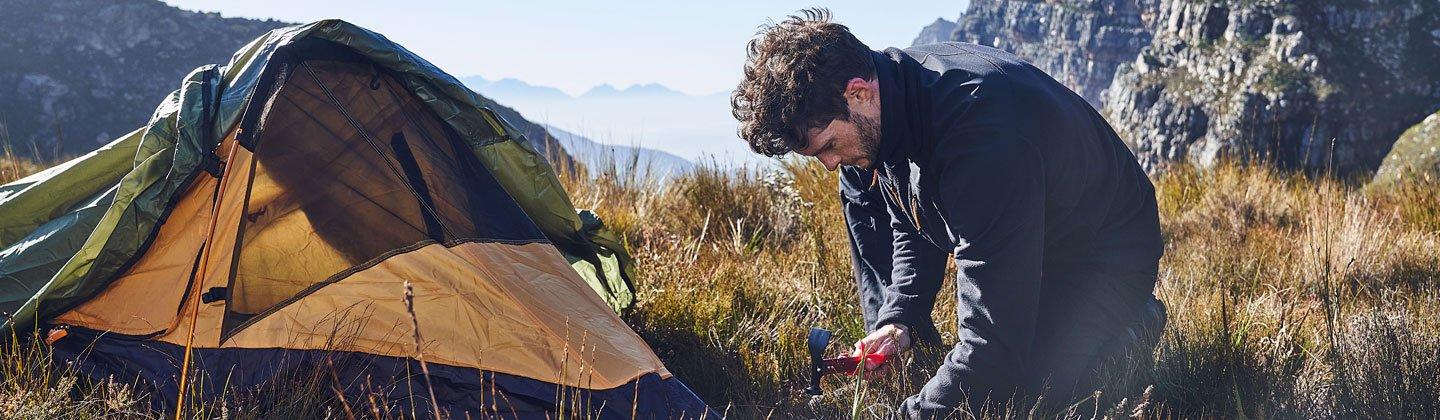
How long should my tent last?
A tent’s lifespan can vary based on how often it is used, the rigours it is put under and the weather it stands up to during use. With careful pitching, and making sure the tent is clean and dried out after each use, your tent should survive for a good few years of use.
Tent Poles
With the various types of tents comes the various types of tent poles.
-
Fibre Glass Tent Poles: These poles are lightweight, cost effective, and flexible. However, under pressure they can snap/splinter so it is important they are not put under a lot of strain.
-
Steel Tent Poles: These poles are made from steel or steel alloys. They are known for their strength and durability, with this comes a higher price point.
-
Inflatable: Also known as ‘air poles’ these poles are a modern alternative to the traditional tent poles you may be familiar with. The tent will have sleeves or beams which can be inflated with a foot pump. Vango Airbeam and Hi Gear AirGo tents are currently using this technology. Inflatable poles offer a great alternative to standard poles, and make for a much faster/less complex pitching.
Tent Accessories
The more you camp, the more you will probably want to extend the camping experience. Certain tents may have compatible accessories and add-ons to make your camp more comfortable.
-
Tent Footprints: A footprint is a kind of made to measure groundsheet/tarp that can be pinned underneath your tent to add an extra layer of insulation for keeping the inside of your tent warmer, while also preventing the bottom of your tent from being scratched, or even ripped, on the ground.
-
Tent Carpets: A little bit of luxury to make your tent a real home away from home, the tent carpet is another great insulator that will keep the warmth inside the tent and prevent the tent floor being colder under foot. It may seem a little more glamour camping than some people like, but for longer holidays a carpet can certainly make the experience more comfortable.
-
Tent Porches: Love your tent but wish it had just a little more space? No problem. Tent porches are smaller extensions that can be used to store muddy gear or bikes. Hi Gear porches also have a gap around the bottom which makes them well ventilated enough to cook in during Britain’s less than sunny summer weather.
-
Windbreaks: A windbreak can be used for a variety of things while camping. While the obvious use is to keep the wind out of your camping area, it can also be used to add a little more privacy to your camp.
Tent Spares
Is there anything more annoying than snapping a tent pole or bending a tent peg? At GO Outdoors we aim to stock all the tent spares that you may need to sort out some of camping’s more annoying issues. Our tent spares include: Tent pegs, tent poles, tent repair kits, mallets, guy lines and tent cleaners.
Shop Tent Spares